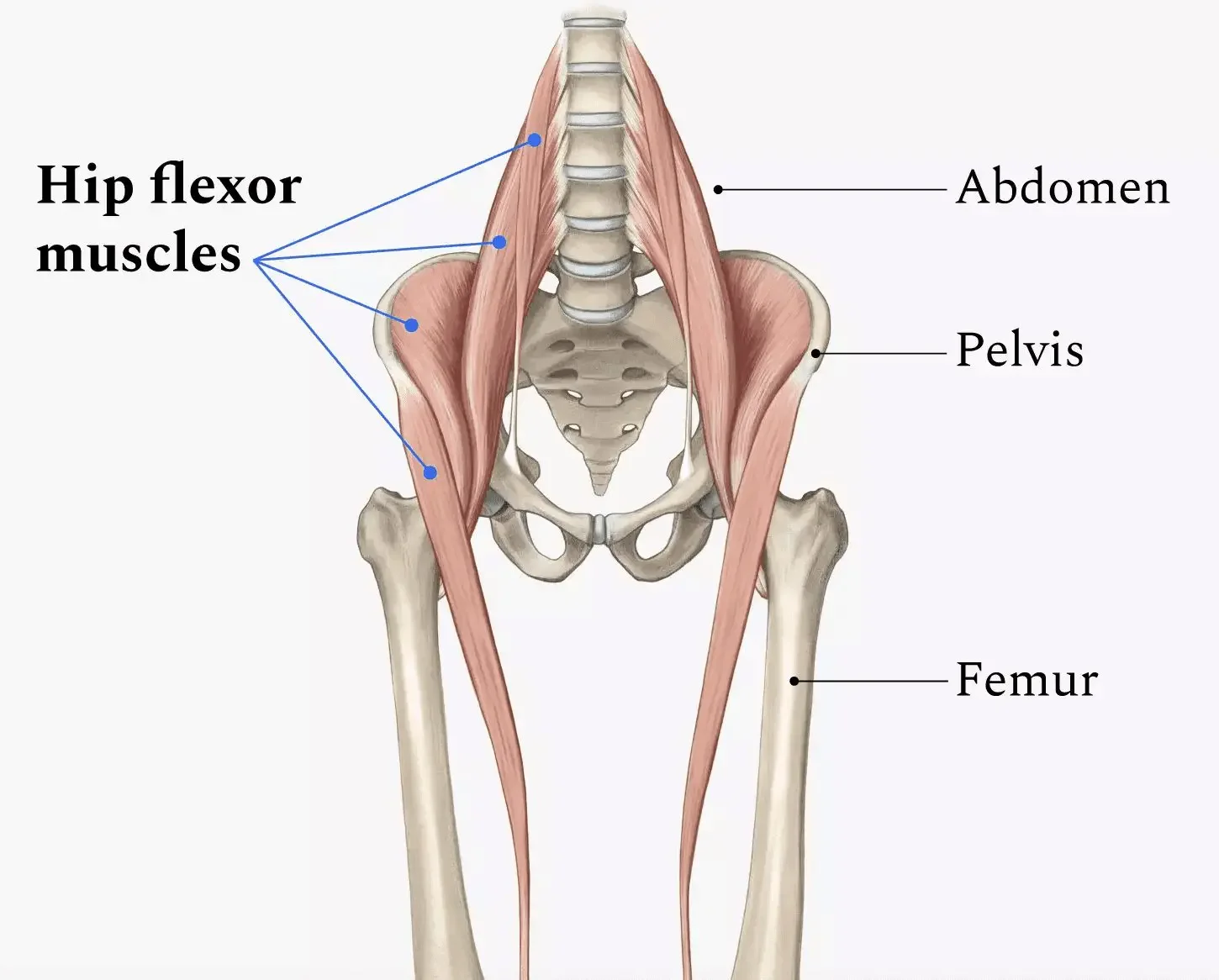
Low back pain is often blamed on the spine itself—but in many active adults, the real driver sits just below it: the hip flexors.
The hip flexors (primarily the iliopsoas group) play a major role in controlling pelvic position, stabilizing the spine during movement, and efficiently transferring force between the upper and lower body. When these muscles are weak—not just “tight”—the low back is often forced to compensate.
The Hip Flexors’ Role in Spine Support
Hip flexors don’t just lift your leg. They help:
Maintain proper pelvic alignment
Assist with trunk stability during walking, running, and lifting
Control excessive lumbar extension
When they’re strong and functioning well, they reduce unnecessary stress on the lumbar spine
What Happens When Hip Flexors Are Weak
Hip flexor weakness can lead to:
Increased lumbar overuse: The low back muscles work harder to stabilize and move the body
Altered movement patterns: The spine substitutes for hip motion during activities like running, squatting, or getting up from a chair
Poor load distribution: Forces that should be absorbed by the hips shift to the lumbar spine
Over time, this compensation can contribute to stiffness, muscle guarding, flare-ups, or persistent low back pain.
Why Stretching Alone Often Falls Short
Many people focus on stretching hip flexors when back pain shows up. While mobility matters, stretching without addressing strength can actually worsen instability. A muscle can feel “tight” because it’s weak and overworked—not because it needs more length.
The Fix: Strength With Intent
Improving hip flexor strength—especially through controlled, functional movements—helps:
Restore proper pelvic control
Reduce excess lumbar motion
Improve efficiency during sport and daily activity
When the hips do their job, the low back doesn’t have to.
Bottom Line
Low back pain isn’t always a back problem. Weak hip flexors can quietly drive compensation, overload, and recurring symptoms. Addressing strength—not just flexibility—can be a key step toward lasting relief and better movement.
If back pain keeps coming back despite stretching and rest, it may be time to look at how your hips are contributing.
Looking for Lasting Relief From Low Back Pain?
Low back pain is one of the most common reasons people seek physical therapy, especially among active adults, athletes, and individuals with recurring flare-ups. If you’ve tried rest, stretching, or general exercises without lasting results, the issue may not be your spine alone. At JSR we evaluate the entire movement system—especially the hips—to identify strength deficits and movement patterns that contribute to ongoing low back pain. A targeted, individualized approach can help reduce pain, restore function, and keep symptoms from coming back.