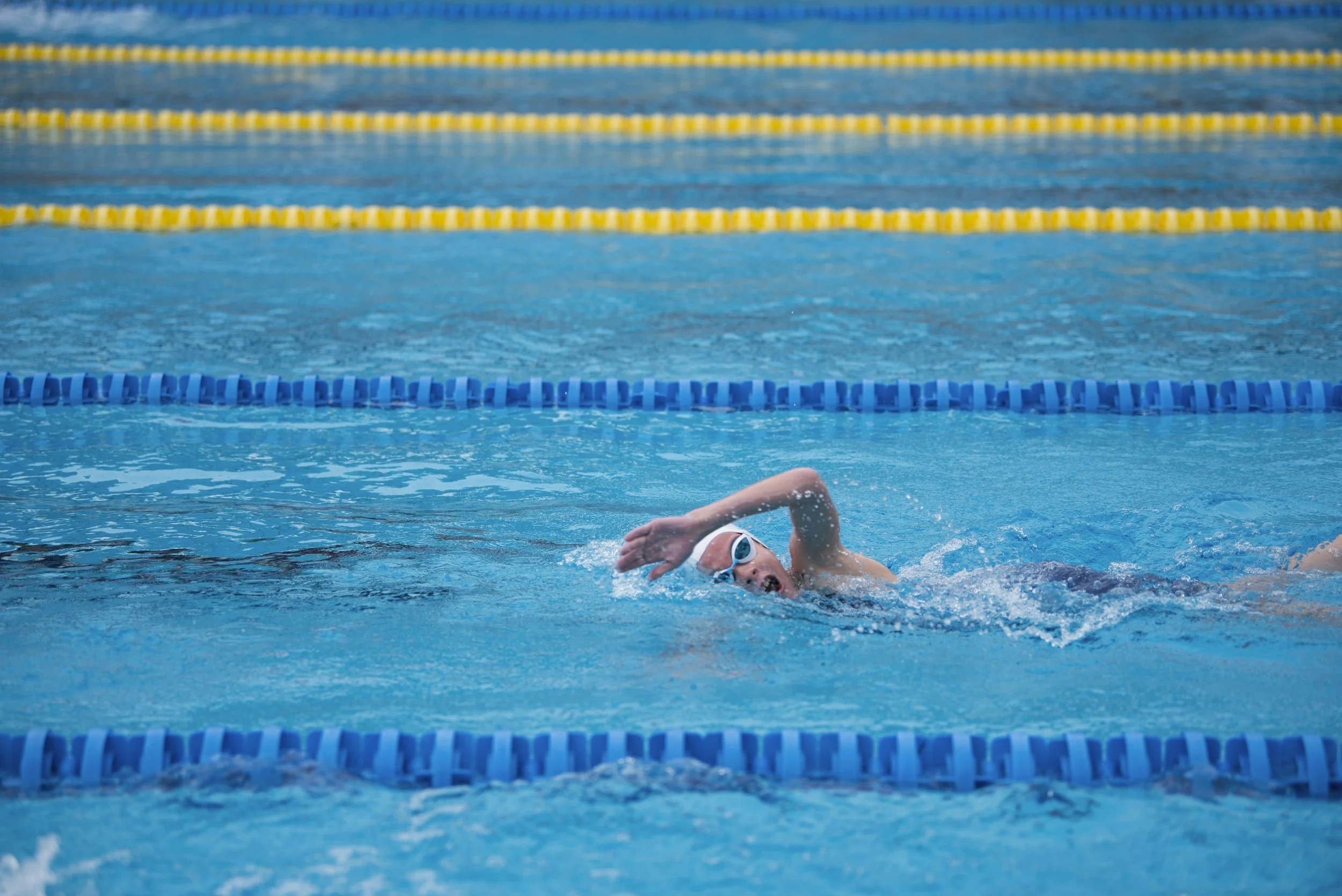
Swimming is a fantastic sport for cardiovascular fitness, endurance and whole-body conditioning. But despite being low-impact on joints compared to many land sports, swimmers face very high rates of shoulder problems. Because every stroke uses the shoulder repeatedly — often thousands of times per week — subtle overload, technique flaws or muscle imbalances can add up.
At JSR, we see many swimmers with shoulder pain, and it’s our goal to help you recognise, prevent and manage these injuries so you can stay in the pool strong and pain-free.
How common is shoulder pain/injury in swimmers?
A recent systematic review found reported rates of shoulder injuries among competitive swimmers between 40% and 91%, depending on study design, age and competitive level. MDPI+2journal.aspetar.com+2
In a survey of youth swimmers aged 9-17 in the U.S., 49% reported shoulder symptoms that impacted their swimming. PMC+1
One 2014 article stated that shoulder injuries are the most common injuries in swimming, with prevalence in many studies from 47% to 90%. journal.aspetar.com
Among highly trained swimmers, one study reported 74% had experienced at least one shoulder injury, and more than half of those had a recurrence. British Journal of Sports Medicine
The takeaway: shoulder issues are very common in swimmers, not just the occasional problem. Recognising the risk and taking proactive steps is key.
Why do swimmers get shoulder injuries so often?
Here are some of the major contributing factors:
Repetitive overhead motion – Freestyle, butterfly and backstroke all involve repeated overhead or near-overhead arm movements, putting the shoulder in vulnerable positions for long periods. journal.aspetar.com+1
High training volume – Elite swimmers sometimes complete thousands of arm rotations per day. That repeated load accumulates. PMC+1
Technique flaws – Small inefficiencies in stroke mechanics (for example poor body roll, incorrect entry, hand path) can increase shoulder stress. journal.aspetar.com
Muscle imbalances / fatigue – If the shoulder stabilisers (scapular muscles, rotator cuff) are weak or fatigued, then the larger muscles take over and strain increases.
Training load spikes – Rapid increases in volume or intensity (new sets, more distance, hand paddles or drag devices) are often tied to onset of pain. journal.aspetar.com+1
Prior injury – A history of shoulder pain is one of the strongest risk factors for new or recurring shoulder injury. PMC+1
The most common shoulder injuries in swimmers:
1. Swimmer’s Shoulder (Overuse Impingement)

Often called “swimmer’s shoulder,” this is really a pattern of overload, irritation or impingement of the rotator cuff tendons (especially the supraspinatus) and related structures. The term is broad but useful.
journal.aspetar.com
+1

What to look for: Pain with the catch or pull phase of stroke, soreness after training, sometimes pain in daily life if it’s progressed.

2. Rotator Cuff Tendinopathy / Tendinitis

With constant repeated motion, the rotator cuff (the small stabilising muscles of the shoulder) can develop tendon irritation or degeneration. Over time it can become a chronic issue rather than an acute tear.
Key issues: Weakness in external rotation, pain with resisted movements, fatigue of the shoulder late in training.

3. Labral Injuries (e.g., SLAP tear)

The labrum is the ring of cartilage around the shoulder socket; in some swimmers, repeated overhead stress or subtle instability can cause fraying or tearing of the labrum.
Signs: Deep-shoulder pain, catching or clicking, decreased power in strokes, sometimes a feeling of looseness.

4. Shoulder Instability / Multidirectional Instability

Some swimmers develop too much laxity or movement in the shoulder joint (often because of high training loads + technique demands) which leads to pain, micro-trauma and inefficient mechanics.
What you might notice: Shoulder “slipping” sensation, fatigue when doing long sets, uneven stroke power.

5. Scapular Dyskinesis

The shoulder blade (scapula) must move smoothly to allow the arm to move efficiently overhead. When the scapula is not stable (dyskinesis), the shoulder joint takes extra loads.
Clinical clue: Asymmetry in the shoulder blade during movement, difficulty holding proper body roll or stroke posture, fatigue of shoulder stabilisers.
How can swimmers and coaches address/prevent these injuries?
Here are practical tips to help avoid shoulder problems — and to manage them early if they arise.

Monitor training load – Avoid large sudden increases in volume or intensity. Gradual progression is safer.

Technique check – Regularly review stroke mechanics: hand entry, catch, pull-through, recovery, body roll. Poor mechanics = more shoulder stress.

Strength and conditioning – Emphasise rotator cuff strength, scapular stabilisation, core and trunk control. A balanced dryland program helps.

Scapular control – Exercises like scapular retractions, stabiliser work, serratus anterior strengthening are helpful.

Flexibility / mobility – Ensure adequate range of motion in the shoulder, thoracic spine, and control of the shoulder blade.

Early recognition – If a swimmer reports shoulder soreness that’s lingering, catching, or increasing during training—address it early rather than ignore it.

Load modification – If pain occurs, reducing volume, avoiding aggravating sets, and cross-training can prevent escalation.

Multi-disciplinary approach – Work with coaches, swim technique experts, strength & conditioning and physical therapy together for best results.
When to see a physical therapist?
If you're a swimmer and experiencing:
Persistent shoulder pain (that doesn’t go away after rest)
Loss of stroke power or speed related to the shoulder
Clicking, catching, or instability in the shoulder
Recurring shoulder issues
…then it’s a good idea to have an evaluation by a physical therapist experienced with swimmers. At JSR we assess shoulder strength/motion, scapular control, and work with you and your coach to build a targeted plan.
Shoulder injuries in swimmers are common but not inevitable. With smart training, good technique, strength & mobility work, and early attention to symptoms, most swimmers can perform and train without chronic shoulder pain.
At JSR, we aim to help you stay strong, efficient and injury-free in the pool. If you’d like a shoulder screening, or want to discuss swim-specific shoulder rehab, we’d be glad to help.