
Why Grip Strength Matters in Baseball Players

Grip Strength: The Secret Link to Velocity, Control & Shoulder Health
Grip strength might be the simplest but most overlooked metric in overhead athletes — especially baseball players.It predicts shoulder stability, elbow stress, velocity, and even how efficiently energy transfers through the throwing chain.Overhead athletes generate enormous force through the kinetic chain — from the ground → hips → torso → shoulder → elbow → wrist → hand.The hand is the final link in that chain.If grip strength is low or imbalanced, the entire chain becomes less efficient… and less safe.So How Exactly Does Grip Strength Help?
1. Grip Strength = Shoulder Stability
During throwing, the rotator cuff fires intensely to stabilize the humeral head.
But research in biomechanics shows that distal stability (forearm & grip) reduces proximal load.
Stronger grip =
More co-contraction of rotator cuffBetter humeral head controlImproved dynamic stabilityLess stress on the labrum and capsule
A stronger grip helps protect the shoulder during high-velocity throwing.2. Grip Strength Correlates With Velocity & Control
A stronger grip improves:Wrist stiffnessEnergy transfer at ball releaseSpin rate & command
Pitchers with higher grip strength often demonstrate:Higher velocityMore stable release pointReduced elbow varus torque
3. Grip Strength Protects the Elbow (UCL)
UCL stress peaks during late cocking and acceleration. A strong grip improves forearm flexor-pronator activation — the natural dynamic protectors of the UCL.Low grip strength = increased UCL load = higher injury risk.How Can We Test Grip Strength:
We typically test grip strength using a device called a dynamometer. These devices can be inexpensive with some $30 options on amazon. It is ideal to test grip strength in 2 positions:Arm at the side of the body with the elbow bent to 90degreesArm straight overhead
To determine left to right grip strength you take 3 maximal effort squeezes of the dynamometer in each position on each hand. Add the 3 numbers together then divide by 3 to get the average in each position. You can then compare these measurements left to right and overhead to down at the side of the body.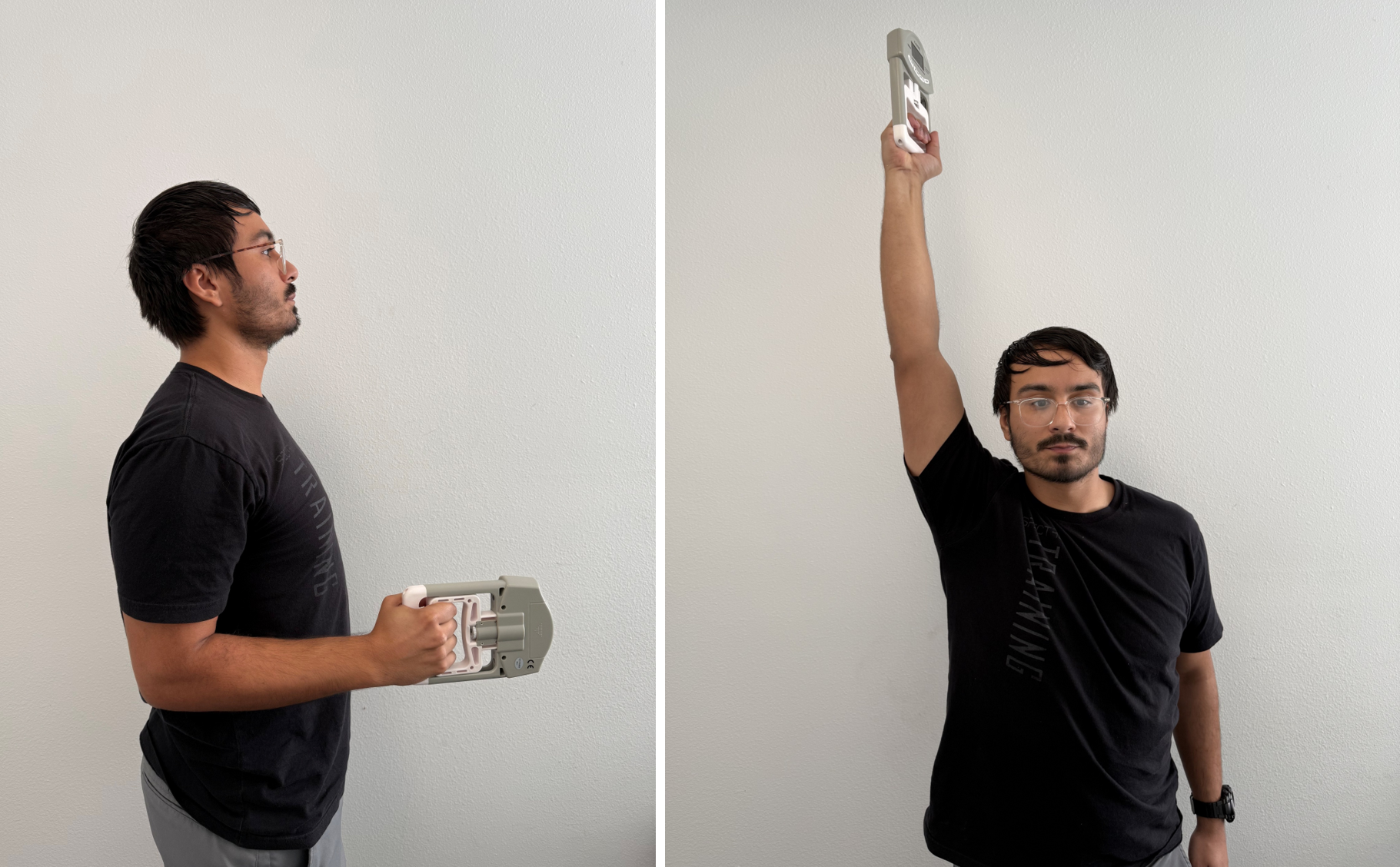
Why Test Grip Strength Overhead?
Testing overhead simulates the functional throwing position where the shoulder is externally rotated and elevated — the exact moment when:Rotator cuff demand is highestGrip-forearm-shoulder linkage matters mostInjuries frequently occur
The Key Rule: Grip Strength Overhead Should Be ~2% Stronger Than at the SideBecause in overhead position the rotator cuff and scap stabilizers engage more. This increases neuromuscular drive through the kinetic chain → producing a small but measurable strength boost.The 2% Rule
If overhead grip strength is roughly 2% stronger than grip at the side → NORMALIf overhead grip = SAME or WEAKER → Red flagPossible cuff inhibitionScapular dyskinesisPrevious shoulder or elbow irritationPoor energy transferIncreased injury risk
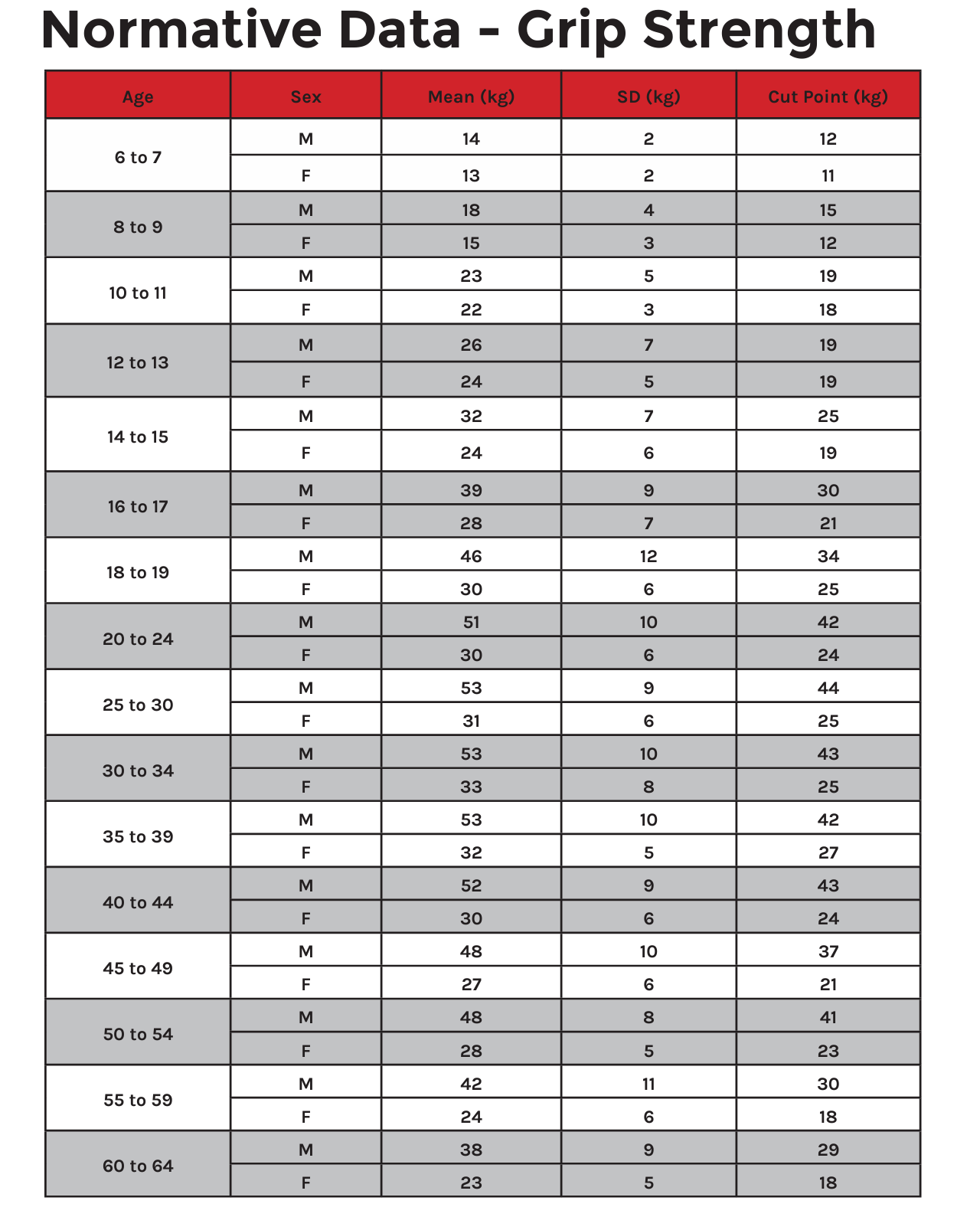
Normative Grip Strength Values: Provided through FMS
The Grip testing mentioned above is just one of many tests we perform on our baseball players to ensure that the whole body is functioning cohesively as a unit. There are many other body parts to look at to ensure too much stress isn't going to the elbow or shoulder such as hip mobility, core strength, pelvic control, single leg balance and strength, etc.

And I know we focused on Baseball, but grip strength is important in all overhead sports whether its volleyball, tennis, pickleball, football, etc.

If you would like to be screened due to pain or a history of pain, let us know!