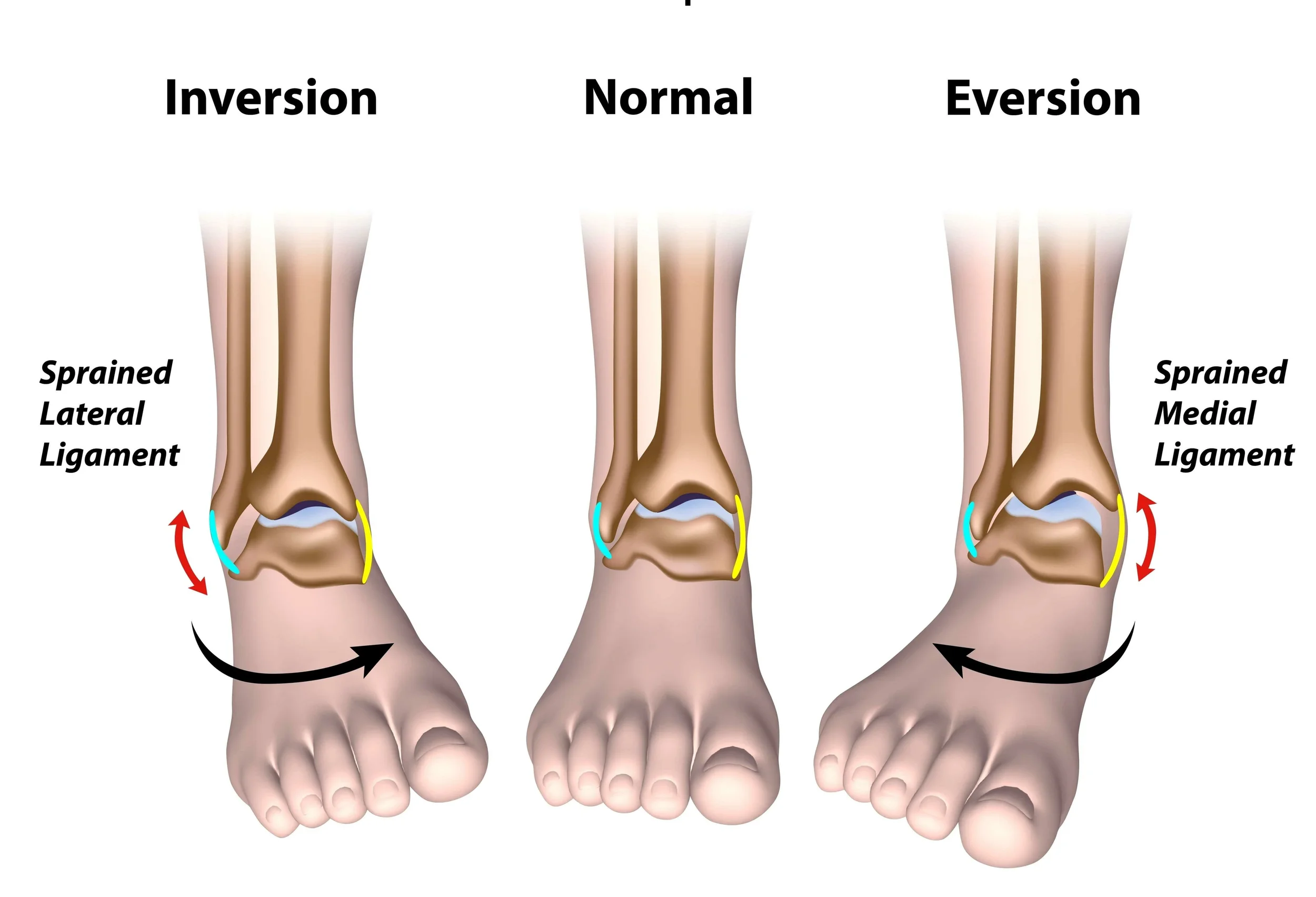
Most Common Sports for Ankle Sprains (and Why Athletes Are at Risk)
Ankle sprains are especially common in sports that involve jumping, rapid changes of direction, cutting, or contact — movements that stress the ankle joint repeatedly or unpredictably.
Here are some of the top sports and statistics:
Basketball consistently shows among the highest ankle-sprain rates. In one study, the ankle-injury rate was ~3.85 per 1,000 participations.
Soccer is frequently listed among the top sports for ankle sprains, due to cutting, pivoting, and contact.
Volleyball players face higher ankle sprain risk (especially high ankle-sprain risk vs the traditional inversion ankle sprain) because of jumping and landing, especially at the net.
Indoor/court and team sports broadly (handball, field hockey, netball, etc.) — A broad review found that ankle sprains are among the most common injuries across many sports — particularly those involving court play, quick direction changes, or jumping.
At the collegiate level, foot and ankle injuries (with ankle sprains the most common) often account for a substantial portion of all injuries — especially in disciplines involving jumping and changes in direction
Because athletes in these sports frequently push through minor injuries or “shake off the pain” to keep playing, ankle sprains often go under-treated — which can lead to a cascade of future problems.
Long-Term Implications of Skipping Proper Recovery
Neglecting recovery or returning to sport too early after an ankle sprain can lead to several negative long-term outcomes:
Chronic Ankle Instability (CAI): Up to ~20% of people who suffer an acute ankle sprain go on to develop CAI; other studies suggest recurrent sprains and persistent symptoms in 40–70% of cases.
With CAI, the ankle can repeatedly “give way,” leading to further sprains, swelling, and functional limitations.
Post-traumatic osteoarthritis (PTOA): Repeated or poorly healed sprains can cause joint cartilage damage, early wear and tear, and eventual arthritis — even in relatively young athletes.
Altered biomechanics, secondary injuries: To compensate for a weak or unstable ankle, people often change their gait or movement patterns — which can overstrain other joints (knees, hips, back) or lead to chronic stiffness in the ankle.
Reduced performance & quality of life: Chronic pain, instability, or limited mobility can interfere with athletic performance, daily activities, and long-term physical health.
How Proper Recovery + Rehab Helps:
Allows ligaments to heal properly — Controlled rest, protection (bracing or limited weight-bearing if needed), and gradual rehab give the injured ligaments time to scar in and regain strength.
Restores stability and proprioception — Rehab should include exercises for range of motion, strength, balance, and neuromuscular control. This is crucial for preventing re-sprains or instability.
Prevents chronic issues — By allowing proper healing and retraining the supporting muscles/joints, you significantly reduce risk of chronic instability, arthritis, and long-term impairment.
Prepares you safely for return to sport or activity — Rather than jumping back in too soon and risking re-injury, a full recovery gives you the best chance of returning at full strength with reduced long-term risk.
An ankle sprain may seem like a short-term setback, but how it is managed early can greatly influence long-term movement, performance, and joint health. Allowing the ankle to fully recover helps restore strength, stability, and confidence while reducing the risk of future injuries. Working with a physical therapist ensures that recovery focuses not only on pain relief, but on rebuilding proper movement and preparing the body for a safe return to sport or daily activity.